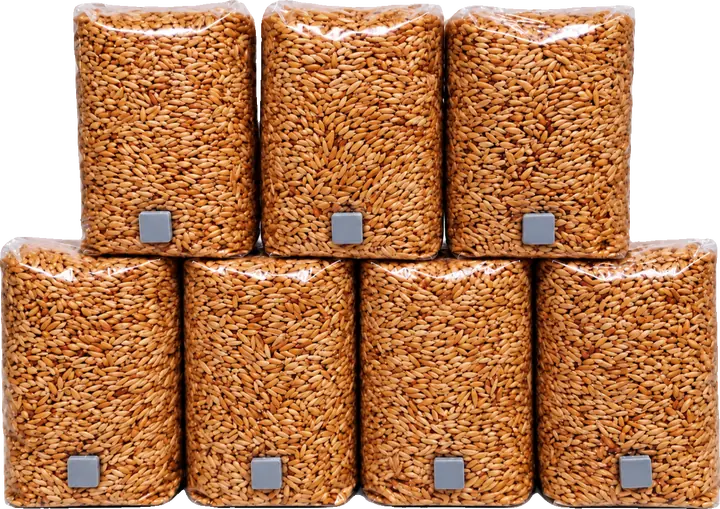
Sterilised corn grain, ready to inoculate
Corn kernels are five or six times the size of wheat. Fewer inoculation points per kilo, but each kernel is a reservoir of food, which suits slow, hungry species and spawn that will sit a while. Each bag holds hydrated, nutrient-enhanced corn that has been through a full autoclave cycle at 121°C, sealed behind a 0.2 micron filter patch with a self-healing injection port on the front. Inject a liquid culture or drop in agar wedges, keep it warm and dark, and in two to three weeks you have corn grain spawn: the thing you mix through a substrate to grow a flush of mushrooms.
Sizes and prices: 1kg for $35 and 2kg for $55, with the grain pre-selected when you add it from this page. Prices in AUD, GST inclusive where it applies, shipped tracked Australia-wide. Corn is also the grain inside our Grain & Substrate Combos and All-in-One Grow Bag.
Made by hand in small batches, shipped fresh
We do not run a production line. Every batch of corn is soaked, simmered, drained to field capacity, enhanced, bagged and sterilised by hand in a small run, checked bag by bag and shipped within days of being made. Fresh grain matters more than most growers realise: a bag that has sat in a warehouse for months dries at the edges, loses the surface moisture the mycelium needs to get going and gives you a slower, patchier start. Ours arrives at the moisture it was made at, which is why it colonises the way it does. We are also one of the only Australian stores to bag four different grains (wheat, oats, corn and milo) instead of one, so you can pick the grain for the job rather than the grain the supplier had.
Why corn
- Reserves. A big kernel keeps feeding the mycelium long after a small one is spent, so corn spawn stays vigorous for longer and suits slow colonisers.
- Easy to read. A contaminated kernel stands out on corn like nothing else, so you catch a problem early instead of mixing it into a tub.
- Mixes through coarse substrate. Big kernels sit evenly in hardwood and chunky mixes where small grains can sink.
- The popcorn tek, without the pressure cooker. The community method of growing on corn usually starts with a day of soaking and an hour in a pressure cooker. Our bags arrive ready to inject.
How to use it
- Inoculate
Wipe the port with 70% alcohol. Flame the needle until it glows, let it cool for a few seconds, push through the port and inject 2 to 5 ml of liquid culture into a 1kg bag, spread over two or three spots. Agar wedges go in through the top in a still air box. The corn grain tek walks through every step.
- Colonise
Keep the bag at 20 to 26°C, out of direct light, filter patch uncovered. Do not squeeze it in the first week. When a third of the grain is white, break the bag up gently so the mycelium spreads, then leave it to finish.
- Spawn
When every kernel is white and the bag smells clean and mushroomy, it is spawn. Break it up and mix it through substrate at 1:2 to 1:4 by weight. The grow builder picks the ratio and the bag sizes for your tub.
What to expect from corn
Because a kilo of corn carries fewer, bigger inoculation points, the spawn run knits together a little more slowly than wheat or milo. Give it more injection spots (three or four) and lean towards the 1:2 end of the spawn ratio when you take it to bulk. Corn is the grain we reach for with king oyster, shiitake and reishi, and for spawn that needs to hold in the fridge for a few weeks before it is used.
Which species
King oyster, shiitake, reishi and other slow, hungry species get the most from corn. Oysters will run through it too, just not as quickly as they run through milo.
Wheat, oats, corn or milo?
All four are prepared to the same standard and carry the same nutrient enhancement; what differs is the kernel. Large kernels carry more nutrition each, with fewer, bigger inoculation points per kilo. The grain guide on the home page scores every grain on kernel size, inoculation points and break-up, and the grain comparison goes deeper. Looking at the others: sterilised wheat grain, sterilised oat grain and sterilised milo grain.